Getting into the Fields!

This year we swore we wouldn't plant until May 1st, since for the last five years, we've been hit by a killer cold spell in the last few days of April that's set crops back. However, since the weather is getting so warm so fast, we started getting into the fields last week, way earlier than planned!

We wanted to share a bit over this season about how we grow your veggies, and particularly some of the equipment changes we've been making in the last two years that will allow us to build our soils up better. We also wanted to explain what some of the weird equipment is that you might walk by in the fields! This week we are starting with what we've mostly been doing so far: primary and secondary tillage.

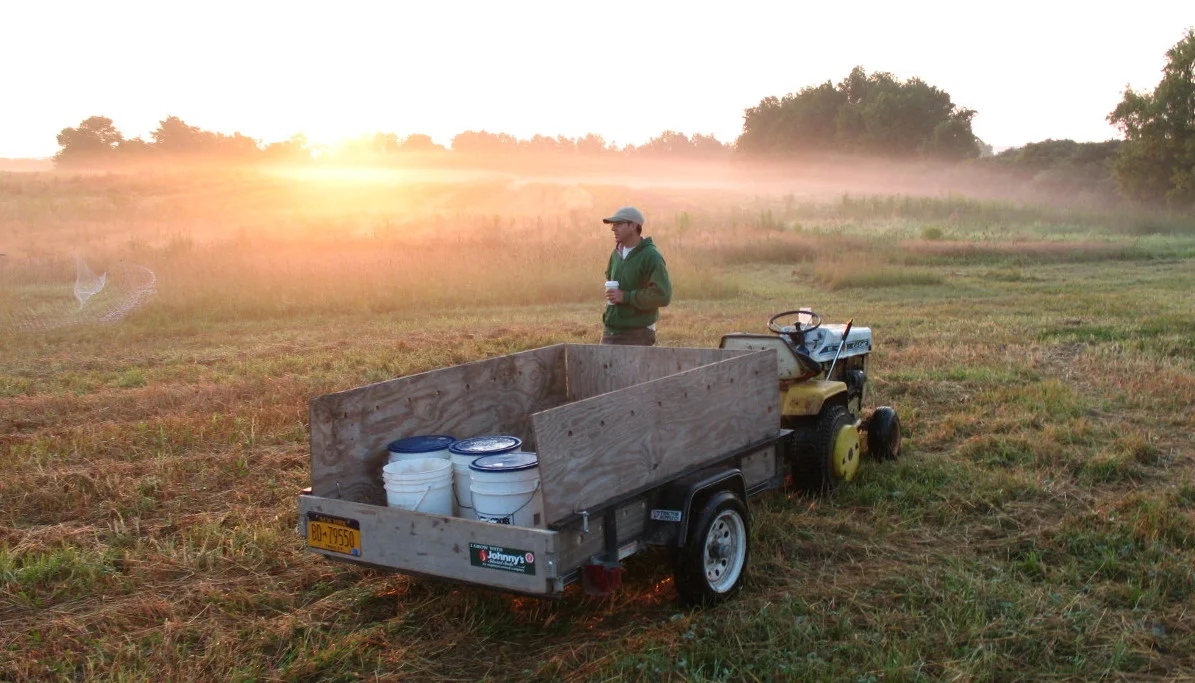
"Primary tillage" is pretty much what it sounds like--the initial field work that prepares the ground for planting. For us, it's a two stage process of spreading compost and/or composted chicken manure, and then chisel plowing. We make some compost on the farm (and buy some in, though we are always looking for more), but we also use an organic, dehydrated chicken manure compost that we spread in the snazzy yellow cone spreader, where it drops through the cone to fly out through the openings at the bottom (yes, spreading this is the dirtiest job on the farm!). This spreader also does double duty as a seeder, helping us plant cover crop seed for green manures at the end of the growing season or in fields we are actively growing on.

Next up is our beast of a chisel plow. This implement (in the picture below) is the one thing that can really strain the capacity of our tractor. It has five giant tines (about 30 inches high) and is pulled behind the tractor, loosening the soil to depths of 6 to 12 inches. We started using this last year because we wanted to do more "vertical tillage," which is where you don't invert the soil with a regular plow, a process which can break up beneficial microbial communities, but rather slice these blades through the soil and any compaction to allow better water percolation and root growth. We've been seeing good results so far!
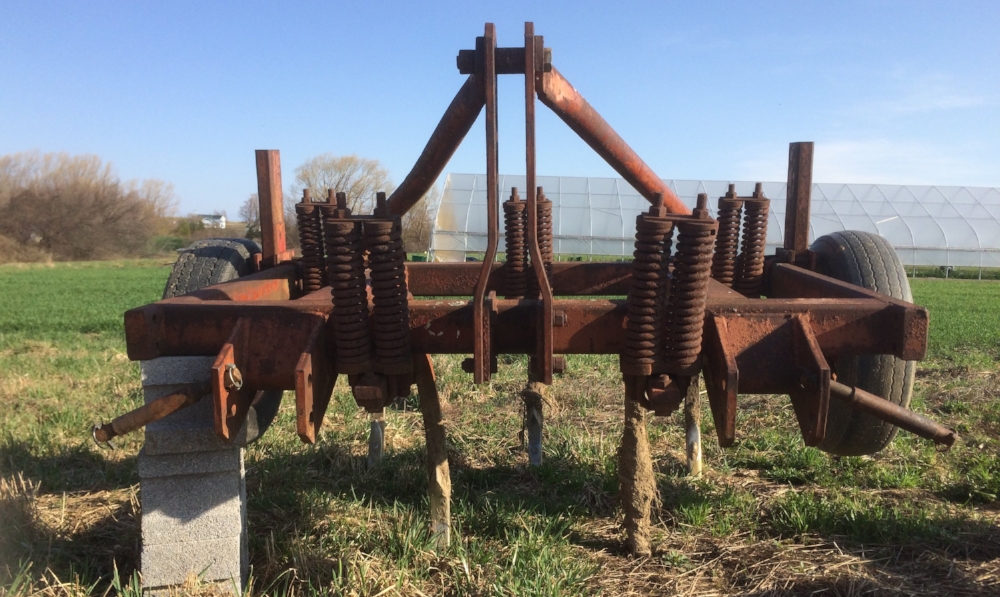
Below is a picture of the chisel plow in action last week in Montana, which we actually left uncovered this winter so it will be ready for the earliest crops of the year (I know, it doesn't look like it's doing much, which is a good sign that it isn't that rough on the soil!).

[We name all our fields after states to help keep them straight. Montana is the highest, most northern field with the biggest view of the sky. California is the field with the high tunnel, since it has the most perfect growing conditions, and since our U-Pick fields are scattered in an archipelago over the farm, we call them Hawaii! If you hear us talking about going to Indiana, Maine, South Carolina, or any other state that sounds like a nice vacation, it's actually more likely we are talking about our growing fields, sadly! We are opening a field north of Montana this year, so one hot farm debate this season is if we should call that new field Alaska or Saskatchewan?]
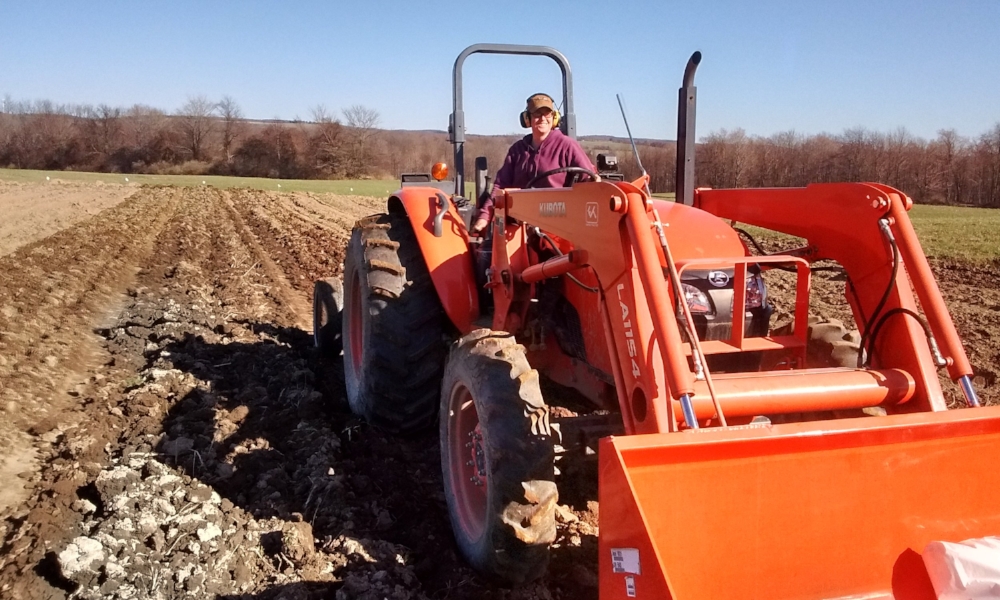
After chisel plowing, we do one of two "secondary tillage" options on the farm. If we need a fine seedbed for direct seeding crops or using a plastic mulch, we would roto-till the soil right before planting. If it's less important to have a perfectly smooth bed, we will use our new tool for this year: the field conditioner. It's a replacement for a couple implements we have used in past years and essentially works the soil more gently with a series of tines, before leveling the soil out with a little roller in back. Our long time goal is to move away from roto-tilling unless absolutely necessary towards more reduced tillage options like this for preparing and managing our fields. Our other long term goal is to mechanize our heavier manual work so that we can handle the farm as we get older! This field conditioner hopefully helps a bit on both fronts!

IMG_3691.JPG

And then the fields are ready to plant! This week we'll be putting a lot of crops into the ground, so we'll try to explain the tools we are using to do that in one of the next weeks! Enjoy your sunshine!
Every Day is Earth Day on the Farm: Hand Grenades and Silent Fields

Matt and I worked on a number of farms over the years, both conventional and organic, but a farm I worked at for half a summer early in my career both has had the greatest lasting impact to me about the importance of working with nature as you farm, and been on my mind a lot this winter thanks to world events.

In 2000, I worked from July through September on a small community’s farm 300 kilometers southwest of Moscow in their potato and vegetable fields, teaching English to kids there, and practicing Russian. At the time, rural lands were in the process of being pulled out of collective farms and semi-privatized. Anyone who had worked on the collectives now could lease a four-acre parcel to do their own thing, and the group I lived with had started a pretty amazing community there. The big catch was that the collective farm had been something like 10,000 hectares (30 square miles!), there were limited traversable roads, and everyone lived in these centralized towns without many private vehicles.

I was in charge of exercising the community’s horse while it’s owner was away, and I would ride for hours through twilight (it didn’t get dark until 11 pm!) across these empty, birch-lined roads and rolling fields. It had an eerie melancholy that took me over a week to realize was due to its dead silence. No birds for the most part, no humming insects (okay, the lack of mosquitoes was pretty nice), just silent fields and whatever sound the wind made across them as they started the process of turning back to what they had been before. Every now and then you would come across a random tethered cow or a small field that was being worked and lush with giant vegetables, or one of the few people still hiking out to use the land they had access to, most often much older women with their five-foot scythe blade at their side, who would rhapsodize about Khrushchev and how things were so much better back then.

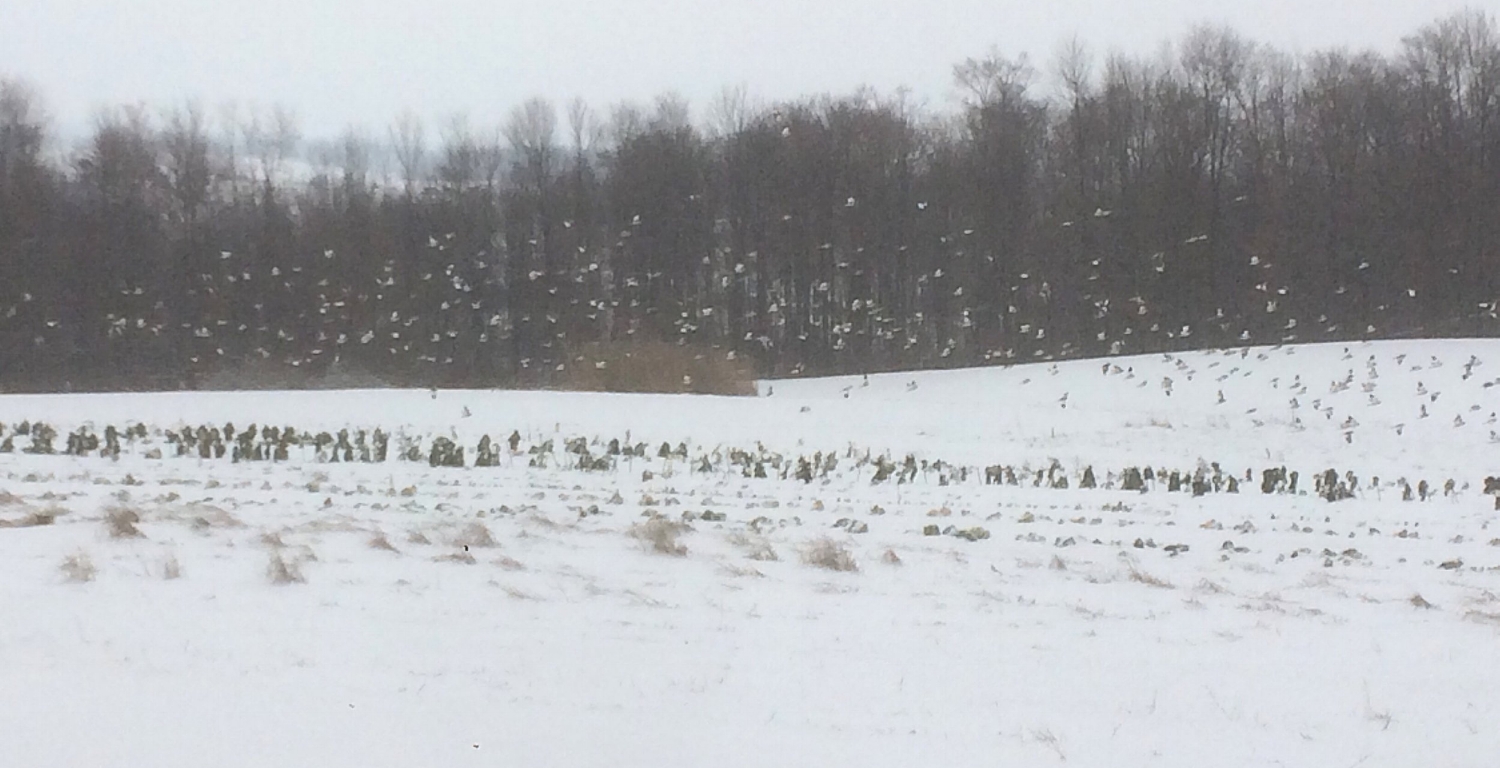
Snow buntings (our favorite winter bird and a rare sight) feeding on our winter wheat cover crop.

Snow buntings (our favorite winter bird and a rare sight) feeding on our winter wheat cover crop.

I was always fascinated by the vast scope of the Russian landscape and the turbulence of Russian history and politics, how they seemed like both an opposite and mirror image of our own county, and how they were able to mobilize on such a large scale to create these immense farms and their hidden giant chemical production cities deep in the taiga. What hit me when I lived there was true cost of such grand expansion—the giant apartment blocks starting to crumble at the edges, the deep lonely silence of insect-less fields, and the difficulty of citizens trying to regroup when the future they trained for in their collective farm roles was gone.

Coming back to the US, that summer lingered with me over the years, and I’ve been thinking about Russia a lot recently. We in North America, like our mirror image continent of Asia, have so many amazing natural resources and potential bounty that we can draw from them, but we have to use the land, air, and water well or we risk going hungry. Eastern Russia has some of the most amazing soils in the world, and while the potato harvest we brought in that year wasn’t considered great for them, it was the best yield on potatoes I’ve ever seen in my life.

Yet even surrounded by such a bounty of beautiful fields and rich soils, those months are the only time I’ve ever gone to bed clawingly hungry every night (I lost over 10 pounds a month there). We largely ate some form of buckwheat three times a day, topped with a thin sauce of vegetables or watered down milk. Once a week there was a half a herring in the dish, and for a special occasion, a piece of pork fat. After potato harvest began, it was the same, but substitute potatoes for the buckwheat. The hunger seemed to be a result of the breakdown of an immense political, economic, and cultural system that hadn’t yet regrouped into something new. (I’m pretty sure it’s a lot better there now.) Sometimes I wonder if mirror situations here in the US are what create the food deserts in some of our cities and rural areas where there might be plenty of food, but not necessarily affordable or healthy options.

Sunset over a boisterous wetland.

Sunset over a boisterous wetland.

I also gained an appreciation that to steward our earth well, we need to have specialists, but there is also a great benefit in having generalists thinking in a general, bigger picture matter on things. People from the collective farm in Russia had learned deeply about the one aspect of the farm operation they did, be it feeding cows or driving tractors or milking, but it was such detailed specialization that outside of the framework of the collective, no one (save those older women hiking the five miles out to their fields each day) seemed to have the generalist big picture knowledge that most small or family farmers here in the States rely on. Coming back to the US, I began work on a small family farm that had begun as a homestead, and their capacity to build, grow, or create literally almost anything was pretty impressive. From a couple decades out, we strive on our farm to find a balance between generalization and big picture farm planning with specializing in vegetable production, and staying up to date with the newest production systems and research.

There’s both a fragility and a resiliency in our natural systems, and we believe that we can work over time to fix most challenges that face us. In Russia, I was initially struck by the vast number of round potholes throughout the woods and along the roads. I thought it was some sort of glaciation phenomenon as it would be if it was here in the northern US, until one day my host mother told me that I should stay on the roads and fields as there were lots of ghosts around from the 100,000 people that had died in WWII in the region. That town was incredibly hard hit by bombs and war and every one of those potholes was an impact crater. Yet half a century later, it was heavily wooded and cultivated, with very few visible signs of the past devastation beyond the cratering. [On a tangent, while working on the potato combine where 8 of us rode on top, picking out rocks, rodents, and funky potatoes as they passed by, I found an odd little cylinder that looked like an old one-pint paint can. My neighbor, shouting over the tractor noise, grabbed it from me, shouting, “Bad! Bad!” As we were bouncing across the field heading home from lunch, packed all 8 in the farm’s little Lada, I noticed her holding it very carefully cupped in her hands as we went over bumps. It was a live grenade left from the war (we blew it up later), and made me realize how scary it must be for everyone farming or living in areas with active landmines and old bombs!]

Clean rainbow skies and air

Clean rainbow skies and air

There’s no price high enough to put on healthy air and soil and water, so we should do our best to keep them clean. In Russia, what got to me most in the end and stuck with me all these years, was that overwhelming silence. You take so much chatter from nature for granted, that it takes a while to realize that it’s all gone. Here on our farm, sometimes there’s an eerie moment when a hawk passes by or in the pause right before a thunderstorm hits and things go all dead or muffled for just a second, and it always makes you look up. Spring and summer here literally throb with insects and birds and mammals, all shouting at the top of their lungs “I’m so sexy!” and “Stay off my lawn!” to anything in earshot.

One of our biggest successes as farmers here at Hartwood so farm is building our farm’s amazing bio-diversity between the mix of crops, pastures, woods, wetlands, and hedgerows. Each year, new species move back in, some as awesome predators and some as annoying pests, trying our patience and nibbling our crops. We feel that over time, we can balance out the system so that the predator and the pests are in balance, rather than try to eradicate all of them into some dull silence.

We do have more work ahead of us to build a system that doesn’t end in silence. Most of our continuing challenges lie in the nature of vegetable production, which with tight planting schedules and yearlong growing can be harder on the soil than we want it to be, with all the cultivation and weeding. We focus on designing a system that replenishes our soil between crops through resting fields, using cover crops, and adding organic matter. You can see some of this even more in action this year through the very long walk you will take through our gauntlet of obnoxiously loud birds and bugs to get to this year’s fields, which are wedged up against the woods at the very back of the farm. We have finally been able to open up enough fields to let half of our growing area rest and replenish each year under a carpet of recuperative green manures. We’ve also been switching around our equipment to use gentler methods to work the soil, so we can rely less on roto-tilling and more on soil building vertical tillage.

And on a bigger picture, we hope to work with our community and our country’s leaders to protect the great soil, air, and water resources we’ve been blessed with in the US, so that they remain filled with happy and healthy and noisy populations of humans and animals. We are happy to be farming in a community where so many farmers, customers, and community members of all political stripes care about their land and health. On this Earth Day and hopefully many to come, we will be working to build a healthy farm system, where soils can lock in and hold nutrients to grow healthy, delicious plants, and where hopefully silence never falls on our fields (outside the rest of winter’s quiet). And I hope to get back to Russia one day and see all the changes that must have happened over the last 17 years. Nature abhors a vacuum, so I like to imagine the fields have refilled with life and sound of busy animals and insects living along side humans in a mix of wild and cultivated lands.

Happy Earth Day!

The 2017 Farm Roller Coaster Is About to Begin!

This week, with the snow finally melted and the heater suddenly turned on full blast, is the week that always feels like that moment you are about to crest the first peak of a roller coaster. We’ve been clicking-clacking up the slope, getting all prepared for things to be underway, but there’s always that one moment when all that goes through your mind (or mine at least, since I’m a little scared of roller coasters) is “I’m not ready!” But of course, it’s too late by then!

This week is our coaster peak on the farm, where *everything* is about to take off! With just two hot days, the fields greened up, the final supply and equipment orders arrived (and are piling up in our driveway, since it’s still too wet to get a lot of it back into the fields!), the chickens are coming home to roost, the greenhouse officially overflowed with plants, and our first crew member starts Monday!

Like the peak of the roller coaster’s jittery excitement, we know spring is about to take us on a ride! Here’s some of what went on these past few weeks getting ready for it…

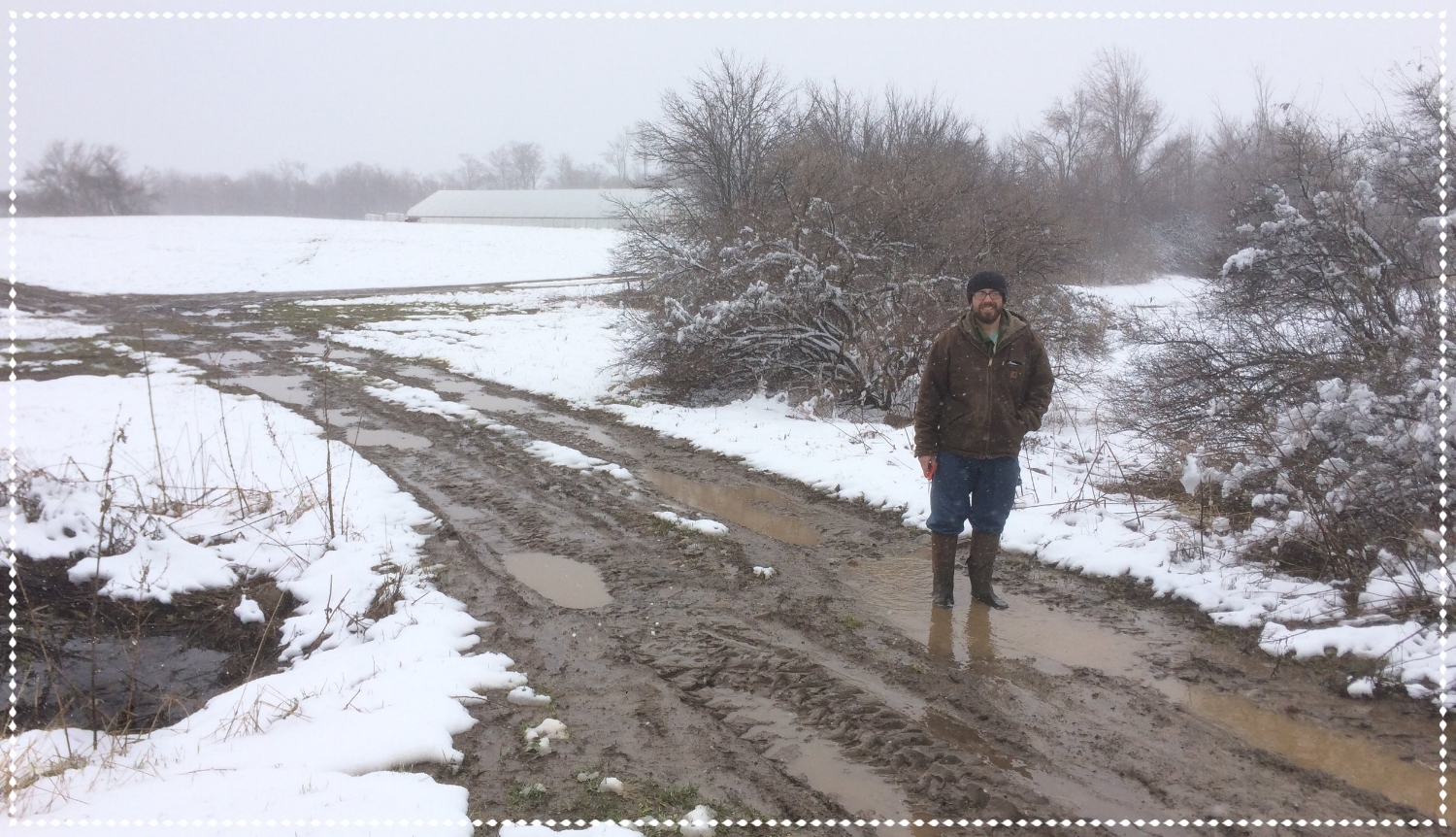
We had a truly impressive amount of mud appear last week, complete with multiple boots lost to it. Fortunately, most of it dried out on Monday!

We had a truly impressive amount of mud appear last week, complete with multiple boots lost to it. Fortunately, most of it dried out on Monday!

Sunday’s beautiful sunshine decimated all those nasty snow piles (for now, we never quite trust that the snow is over until we hit the safety of May). We can’t believe that three weeks ago we were out shoveling feet of snow (we had 34" up here!) off the greenhouses.

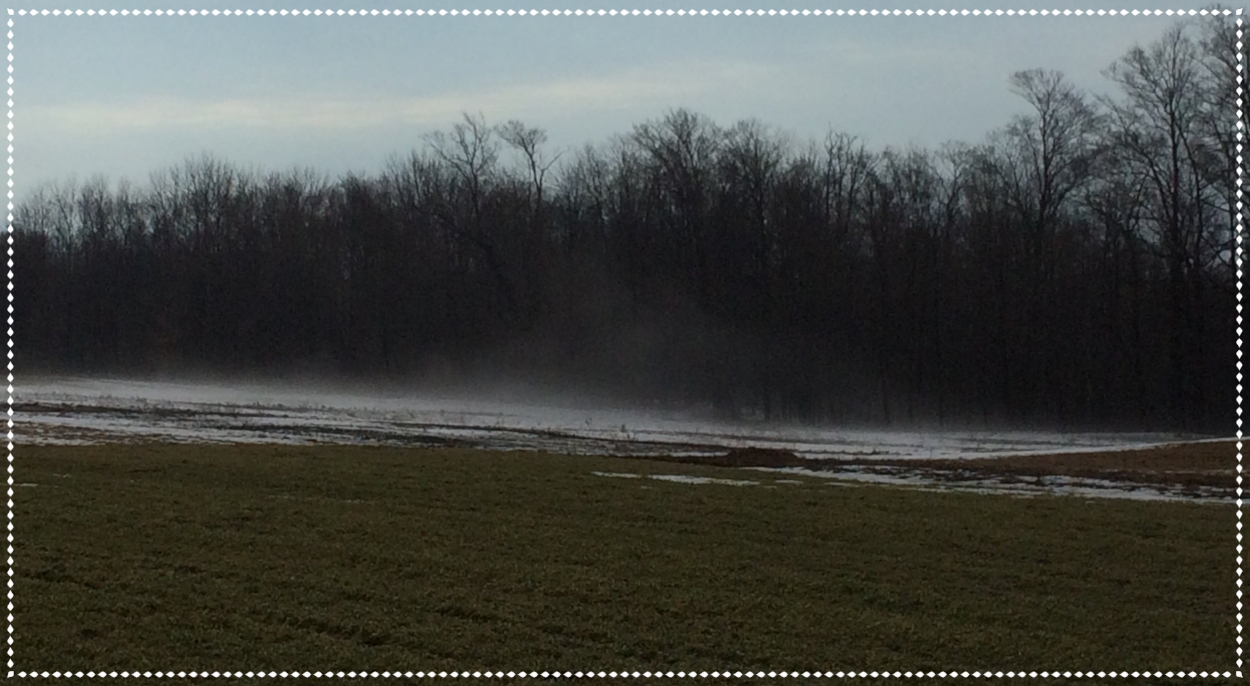
It got quite foggy when those 34 inches of snow melted!

It got quite foggy when those 34 inches of snow melted!

Right now we are solidly in mud season, which hopefully passes with a few more days of warm weather. In general, we need four consecutive dry days to allow the soil to dry enough for fields to be worked, or six days after the amount of rain we had last week. If the weather cooperates, we might have a chance to start preparing the ground early next week (fingers crossed on that).

Our baby greenhouse—the small one that we heat—is maxed out to its limits with its first round of seedlings! This week, we start moving some of the hardier seedlings (onions, leeks, and scallions) out to the unheated greenhouse out in the field where they will live for the next three weeks before planting time. The onions and leeks are also in need of a haircut—trimming them down helps they grow stockier and sturdier.

Freshly re-potted tomatoes, in three weeks they'll be ready to go into the ground of the high tunnel!

Freshly re-potted tomatoes, in three weeks they'll be ready to go into the ground of the high tunnel!

Speaking of the big greenhouse, we have one last winter market coming up next Saturday, which means one last big harvest in the field high tunnel, then we’ll start flipping over those beds to be ready to plant tomatoes in early May! Stop by to say hi to us Saturday between 10 and 1 at the Legion in Cazenovia, and catch the last of the winter spinach, lettuce, kale, and more!

Last week's spread at the winter market--we have lots more goodies for this week!

Last week's spread at the winter market--we have lots more goodies for this week!

The start of the season was a good kick for us to finalize our field maps, which is the giant puzzle of figuring out where and when every crop goes in. It's an incredibly complicated puzzle, as we want to always have a four year rotation between plant families (so nothing gets planted where it's been for at least that long), plus we have to make sure all the crops planted near each other have the same growing period and irrigation method. It's kind of like an incredibly engrossing jigsaw puzzle of hundreds of plantings that you slowly put together over the course of years.

Finally, we are still on target to start the CSA in early June (in just two months!). We do still have shares available at the farm as well as in Fayetteville, Liverpool, Manlius, and Syracuse, and would love to have you join us! You can sign up online at www.hartwoodfarm.com/csa-sign-up  or email us at info@hartwoodfarm.com with any questions or to talk more.

Have a great *real* first week of spring!

A Day in the Life of a CSA Farm: Getting the Veggies Out - A Look at our Harvest and Delivery Days

As we get ready for the growing season, we thought we’d share some of our summer bustling with a look behind the scenes of what goes into harvesting, packing, and delivering all the goodies in your CSA boxes!

A mid-August large share ready to go!

A mid-August large share ready to go!

Planning the Box

CSA shares actually start a week or two before as we start noticing what crops are ripening, and how near things are to perfection. For a Tuesday box, we start eying those crops that are getting close to prime on a field walk a full week before, but make the final decision of who’s ripe or not on the Friday or Saturday before the harvest (this is also when we try to write our newsletter for the week).

We usually have ten to fifteen potential vegetables that we could put into the shares each week, so we spend some time looking at what you’ve been getting, what’s likely to start coming in soon, how near to ripe the crops are, and how popular they are. We try to mix up the shares with a diverse range of produce, and make sure the most popular veggies get eaten! Planning the boxes ends up in the generation of a harvest list of when and how many of each crop need to get picked.

Comparing our pre-season CSA box list with what's actually ripe for the week... lots of differences in the drought of 2016!

Comparing our pre-season CSA box list with what's actually ripe for the week... lots of differences in the drought of 2016!

Harvesting the Crops

Then the big labor of getting the boxes ready begins! We head out into the field to harvest Monday and Tuesday morning (Thursday and Friday mornings for Friday shares). Some veggies we prefer to pick 24 hours before packing the boxes so they have time to chill thoroughly and dry, which helps them last longer in your fridge. Other crops with short storage time (like basil) we like to harvest at the very last minute before we pack the shares. So for Tuesday deliveries, we spend Monday bringing in things that benefit from longer cold storage, and Tuesday harvesting more tender crops.

Out in the field, we motor around with the farm truck, which is loaded with all the tools, rubber bands, and tote bins we need to get the job done. We strive to get everything out of the sun within minutes of harvest, so as the bins are filled, they are stacked up in the shade and kept cool. As soon as we have a full load (or even before, if it’s particularly hot), we race them back to the wash stand.

Emily getting started on the first tote of 200 hundred kale and chard bunches!

Emily getting started on the first tote of 200 hundred kale and chard bunches!

Washing and Storing the Crops

90% of the veggies go through the washing station to get clean and cooled off. By default, we have to wash at the back side of the garage, since that’s where we have both power for our walk-in coolers and potable drinking water for veggie washing. Someday we dream of having a barn in the field with its own drinking water well so that we can wash the veggies closer to where they are grown, not make our lawn all messy, and keep from draining all the water for our showers (yup, we learned in 2016 that in a severe drought, we sometimes have to choose between washing the vegetables and long showers. We hope you appreciated the shiny clean veggies, and gave us a wide berth!).

Late summer root washing... who's that making such a mess?

Late summer root washing... who's that making such a mess?

Pretty much all leafy greens and sturdy greens like broccoli benefit from “hydro-cooling,” which is when they are dunked in super cold water to get all of the field heat out of them. You might not belief how hot veggies can get in the sun, even by only 9 or 10am on a summer morning, but 30 seconds of agitation through icy water goes a long way to cooling them off. All root crops, which are understandably dirty since they live underground, are hosed down particularly well—this is one of the big labor bottlenecks of our farm, so we are playing around with DIY inventions to see if we can speed this up for 2017.

Fruiting veggies like peppers, tomatoes, cucumbers, and squash, we generally try to avoid washing, only doing a quick hose off, wipe down, or dunking in warm water if necessary. These crops are unique because if they are warm and then soaked in cold water, they can suck some of that water in through their skins, which is icky and something we avoid at all costs.

After washing, all the veggies are neatly stacked in clean totes in the coolers to further chill and dry off. Some veggies like greens go through our spinner, but we let most drip dry to keep the cooler humidity level high (this seems to help them survive for an extra week or two in your refrigerators). This spring we are excited to add a second walk-in cooler in the garage so that we can have one cold cooler and one lukewarm cooler, since about half our crops prefer 50 degrees, while the other half yearn for 38 degrees!

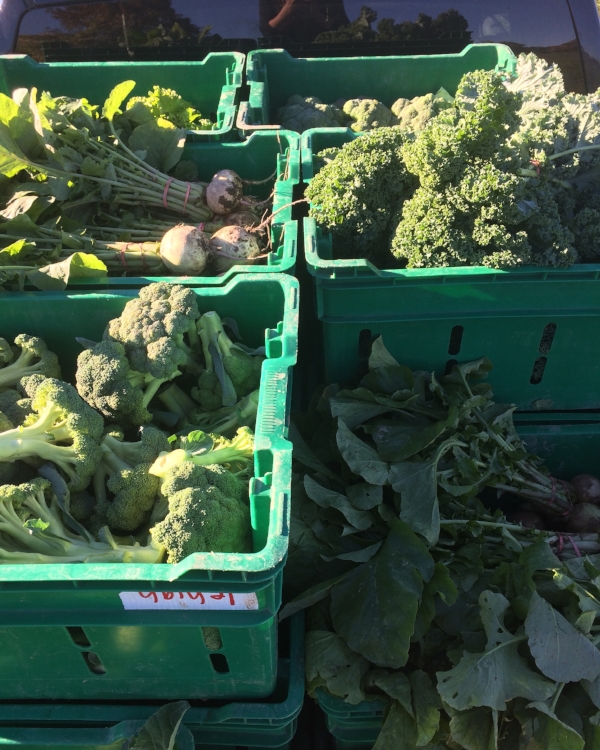
A mixed veggie harvest heading in for the farmers market.

A mixed veggie harvest heading in for the farmers market.

Packing the Box and Deliveries

The morning of share deliveries, we are still out harvesting the more tender crops, but also start packing the bags and quarts that might appear in your share. Greens are spun if needed and weighed into bags, potatoes and more measured into quarts, and odd shaped things like eggplants sorted by size.

Next is packing the boxes themselves, which is my favorite part of the process, since it’s super pretty and feeds into my OCD needs! We get a long assembly line going from the cooler to the truck, sliding the boxes along with each person carefully placing their items in. At the end, they get loaded Tetris-like into the truck.

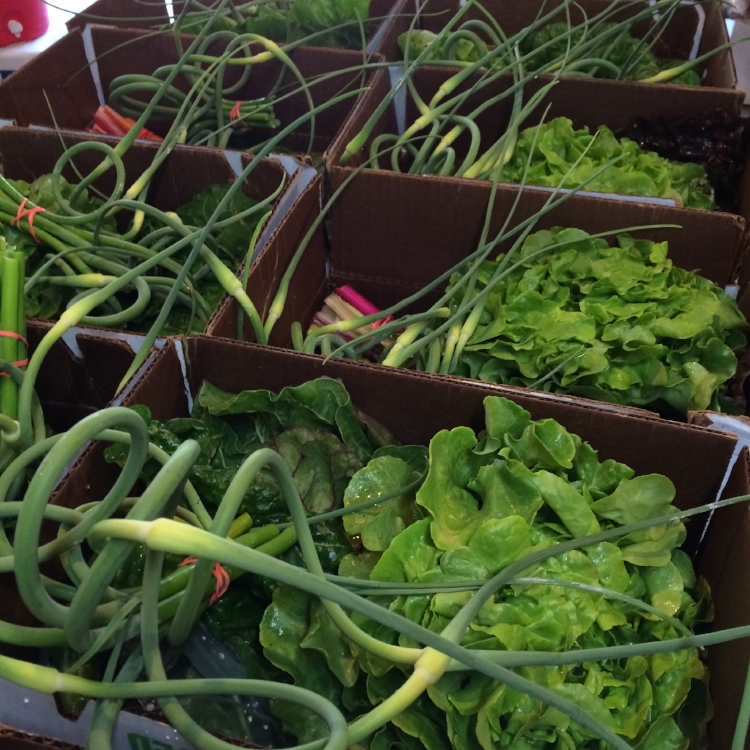
Shares awaiting closing and loading!

Shares awaiting closing and loading!

Once we’ve pulled the vegetables out of the coolers and packed the boxes, we are on a super tight timeline in a race against the summer heat since we don’t have a refrigerated delivery vehicle (another dream future investment). We try to cut it as close as possible, so the veggies have maximum time to chill, but so that we aren’t running late for drop offs. Matt has his special way of loading the truck, and them we speed-pack any extra veggies into the swap basket cooler, toss in the eggs (okay, we don’t *actually* toss eggs in), and chase him out of the driveway.

Then the veggies are ready for you at the distribution sites! We use the annoying-to-open corrugated wax boxes because they help retain coolness, especially when densely stacked. We are also lucky to have cool, shady sites (thanks, site hosts!), but on hot days, we definitely recommend trying to arrive earlier rather than later, since even the best chilled vegetables start to warm up by being outside long enough in August.

We hope you enjoy your share this summer (and yes, we do still have a few shares available!), and please let us know if you have any questions about your veggies!

Loading up at one of the last distributions of the season!

Loading up at one of the last distributions of the season!